Hiring a contractor for a home project can be stressful, especially for first-time homeowners. Before signing any agreement, it’s important to understand exactly what you’re agreeing to and what protections you have as a homeowner.
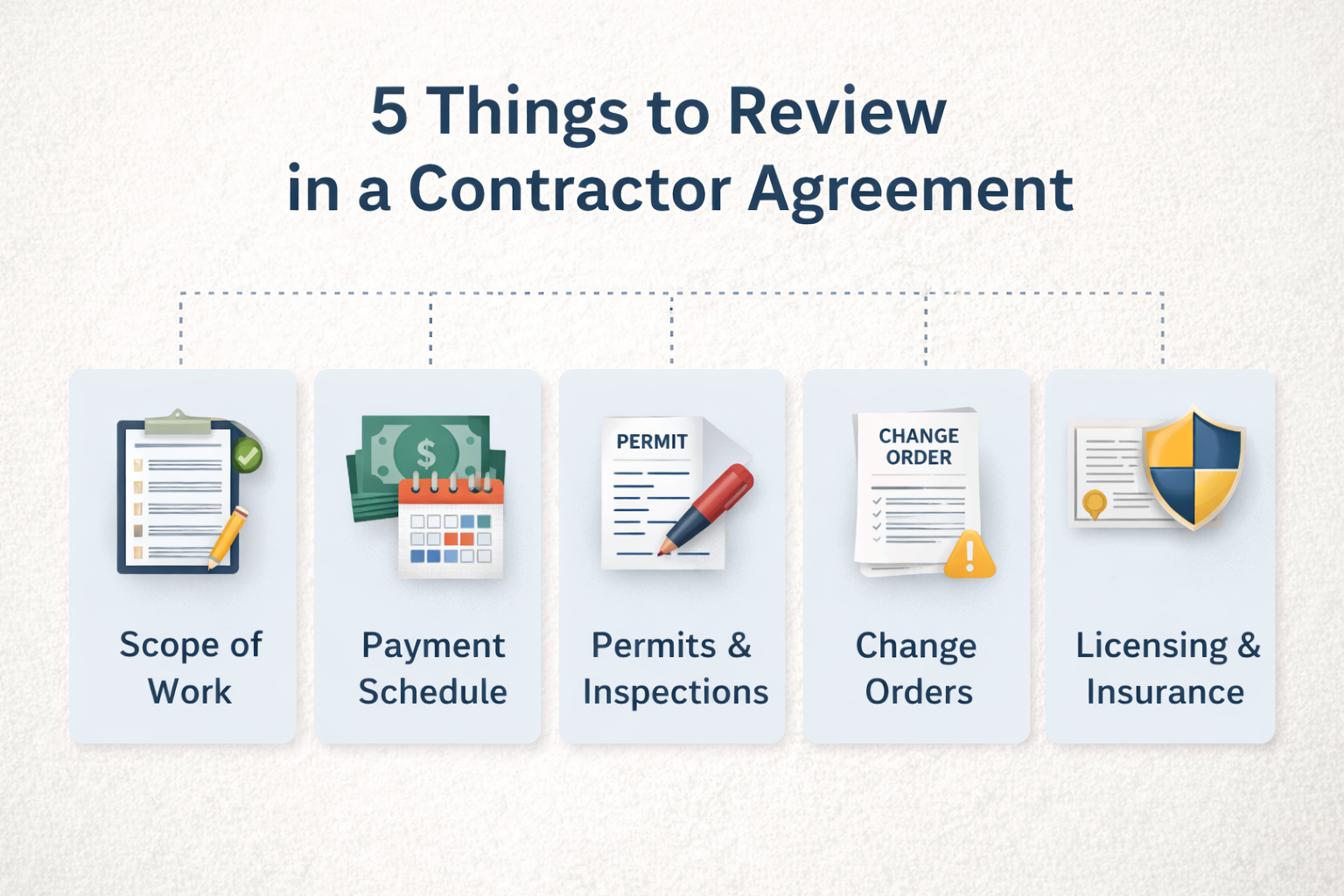
Here are five things every homeowner should review carefully before moving forward with a contractor.

1. A Clearly Defined Scope of Work
The scope of work should describe exactly what the contractor will and will not do. This includes materials, quantities, preparation work, cleanup, and disposal.
If the scope is vague, unexpected costs and disputes are more likely.
Look for sections labeled:
Scope of Work
Exclusions
Assumptions
These sections explain what is included and what may require additional cost.
2. Payment Schedule
A reasonable payment schedule should follow project progress.
Typical structures include:
Small deposit (typically for upfront material purchases & pre-construction tasks)
Progress payments at key milestones
Final payment after completion
Be cautious of situations where a contractor requests large upfront payments without a clearly defined payment schedule or signed agreement.
Deposits are often required when materials need to be ordered or secured, but homeowners should understand exactly what the deposit is for and ensure it is documented in the contract.
If there are no upfront material purchases and no written agreement outlining the scope and payment structure, it may be wise to ask additional questions before proceeding.

3. Permits and Inspections
For many projects, permits are required by the local municipality.
Your contract should clearly state:
Who is responsible for pulling permits
Whether inspections are included
The estimated permit cost
In many cases, permit fees are passed through to the homeowner as a direct cost. This means the contractor pays the municipality for the permit, and the homeowner reimburses that cost as part of the project.
Because permit fees are set by the city or county, they can vary depending on the location and scope of work.
Before starting a project, homeowners should confirm that the contract explains:
Whether permits are included
The estimated permit cost
Who is responsible for scheduling inspections
Obtaining the proper permits helps ensure the work meets local building codes and can prevent issues later when selling or insuring the home.
4. Change Order Process
Home projects often uncover unexpected conditions once work begins.
Your contract should outline how change orders are handled, including:
Written approval
Pricing adjustments
Timeline changes
This prevents surprises later.
5. Contractor Licensing and Insurance
Always confirm that the contractor is properly licensed and insured.
Ask for:
License number
General liability insurance
Workers’ compensation coverage
This protects you if something goes wrong during the project.
Final Thoughts
A well-written contractor agreement protects both the homeowner and the contractor. Taking the time to review the scope of work, payment schedule, permits, and change order procedures can help prevent misunderstandings and keep the project running smoothly.
Clear communication and proper documentation are some of the most important factors in a successful construction project.
If you're planning a home improvement project and want to review qualified professionals in your area, Scope Smart is a platform where homeowners can browse a small network of vetted contractors, review their portfolios, and decide who they would like to contact for a quote.
